Photodon is excited to announce its partnership with Accessibility Services Incorporated!
Continue reading
Protect your digital investment with Photodon screen protectors and privacy filters. Scratches, dings, and foggy screens due to harsh cleaning chemicals can create downtime and frustration. We can help!
Photodon is excited to announce its partnership with Accessibility Services Incorporated!
Continue reading
Did you know that one of the best ways to protect your eyes from being exposed to damaging blue light
is to have Photodon's blue light cutting screen protector on your devices? And not only does our material – called AGB – help with the damage that blue light can cause to your health, but it also reduces glare by 20%.
Your business depends on so much to be successful. One of the most important things that ensures profitability is your production schedule; getting your product to your customers is of utmost importance. Many situations can happen to alter that schedule, and we know how inconvenient the lost money and downtime can be. If your machinery or devices suffer a damaged or broken screen, know that Photodon can help!
Continue reading
Polyethylene terephthalate is a high-performance polyester material known by its abbreviation of PET. Among many other qualities, PET material boasts strength, stability, low moisture absorption, retention of physical properties, and the ability to withstand sterilization.
Continue reading
We get lots of questions about our different screen protector materials and which one to order. We strive to have a lot of information on our main protective material page, but with so much information all in one place, it's hard to absorb it all! So let's address a question that is asked almost daily:
Screen protectors first and foremost protect screens from irreversible damage such as scratches, dings, and harsh cleaning chemicals. You can also use them to help protect your health, increase privacy, and reduce glare. Most importantly, preserving your screen clarity makes your device useable for more years, saving you money and helping the environment.
The very first screen protectors in the early 2000s were transparent and glossy. Manufactures have, over the years, added features to increase the usefulness of these screen savers. The first was to create an anti-glare material, and they did this by etching the outer surface. While this made an anti-glare, it also resulted in pixeling (distortion of the screen image). These early versions of anti-glare were not suitable for close-up viewing of text or for color-critical applications.

Technology has since improved and advanced to correct pixeling and has gone on to solve many other problems. Manufacturers now offer clear, anti-glare, anti-microbial, blue-light cut, privacy, shock-absorbing, hard-coated scratch-resistant, ultra-thin flexible materials, and many other specialty materials. Most screen protectors are used on flat screens and adhere to the screen with silicone resin. The new ultra-thin products usually have a higher adhesion and can bend and adhere to curved surfaces such as phones that wrap around OLED screens and large curved monitors.
When purchasing a screen protector, it would seem like a simple, straightforward decision, and it can be if you want general screen protection. But for those who have a unique application or need to purchase for a product that you or your company are manufacturing, you need to get the best screen protector that meets specific standards or requirements. For instance, will the device be used indoors or outdoors, be used on an office monitor, a drawing tablet, a vehicle in-dash vehicle in-dash, or a public kiosk? Each of these devices have special considerations.

Blue Light Cut
Privacy Filters

–Two-way, which provides privacy from the left and right (or top and bottom depending on the orientation of your screen), with fully backed adhesion. This type is recommended for one installation only.
–Two-way, which provides privacy from the left and right (or top and bottom depending on the orientation of your screen), adhered with adhesive tabs. This type is easier to apply and can be installed and removed many times.
For more information on how privacy filters work, visit our blog: How are Privacy Filters Made, and How do they function? (photodon.com)
Does the environment require a special purpose screen protector material?
If you want a quick answer as to what type of material to purchase from the Photodon website, click this link to our material type questionnaire.
We are happy to help you with any question you may have. If needed, please contact us at 847-377-1185, M-F 9:00am – 5:00pm EST, or email us at [email protected].
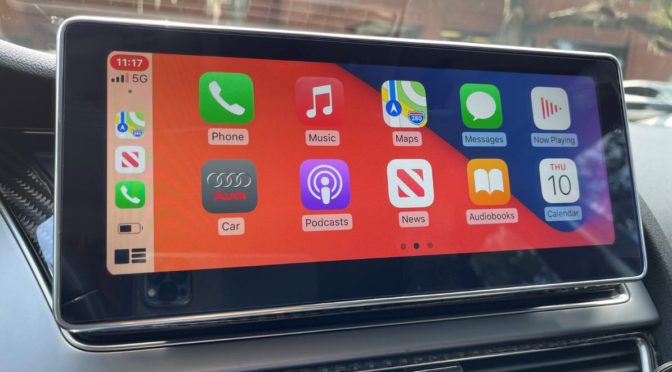
Who doesn’t love how technologically advanced vehicles’ in-dash screens have become? And who DOESN’T love how these wonderfully interactive screens seem to catch every glare imaginable from the sun? If you are searching for a way to still see and use your in-dash screen – even in the glaring sunshine – look no further than to Photodon’s selection of anti-glare screen protectors.
Photodon has choices of anti-glare material types, which you can read about on our site.
Other than the obvious benefit of reducing the glare on your vehicle’s screen, a Photodon anti-glare screen protector also cuts down on visible fingerprints and makes it easier to see the screen. Both of these benefits are important for safely driving your vehicle.
Photodon’s most popular type for vehicles is our 25% anti-glare material called MXH. MXH offers the lowest percentage of anti-glaring, making the screen still fairly clear with just enough matting to cut out the brightest sunshine.
Still unsure of which anti-glare screen protector material type to choose? That happens, especially when you don’t have anything in your hands to try out first in your vehicle. Just know that anti-glare isn't the only option for your vehicle. If you'd prefer a clear screen protector, our clear 9HO is a great option. Samples could be the answer for you, and you can order those here.

If you don’t see your vehicle after searching for it on our site, not to worry. We can still provide a screen protector for you! Just visit our custom cut page and create your order.
We are happy to help you reduce the glaring in your vehicle. If needed, please contact us at 847-377-1185, M-F 9:00am – 5:00pm EST, or email us at [email protected].
If you use a curved ultrawide monitor, you know the performance and efficiency offered by this type of screen is unparalleled. These popular monitors are at the forefront of the commercial market, bringing with them some unintended security risks. In a time of ransomware, phishing, email hacking, and fraud, it is doubly important to put a complete mitigation strategy into practice. Unprotected large screens increase opportunities for threat actors to access data through snooping. The good news is that with Photodon's ultrawide computer privacy screens, your team can reduce vulnerabilities while enjoying the benefits of an ultrawide monitor setup!
Our filters are available to fit the most popular curved widescreen monitors on the market today, such as the Dell U4919DW and Samsung CHG90 QLED 49-inch monitors. If you don't see the monitor you need on our website, not to worry! We can cut custom-sized privacy filters based on your specifications up to a 57.9-inch diagonal. Photodon cuts computer privacy screen material to its final size in Traverse City, MI.
As experts in the field of screen protectors and privacy filters, we have served everyone from mom-and-pop shops to major corporations, and we've also fulfilled prime contracts for the United States government. Whether you are a startup just getting off the ground or a corporation with a global reach, Photodon's privacy filters will allow you to share what you want, and only what you want.
Please contact us so we can work out a solution for you at 847-377-1185, M-F 9:00 a.m – 5:00 pm EST, or email us at [email protected].